1st International Conference on Business, Entrepreneurship and Management (BEM2026)
Introduction
Welcome to the 1st International Conference on Business, Entrepreneurship, and Management. This premier inaugural event serves as a dynamic global platform for academics, industry professionals, and forward-thinking innovators to converge and explore the future of global commerce.
Designed to bridge the gap between theoretical research and practical application, the conference will highlight emerging trends, resilient management strategies, and the entrepreneurial mindset required to thrive in today’s rapidly evolving economy.
Join us to connect with global thought leaders, share groundbreaking ideas, and help shape the next generation of business excellence.
Conference Agenda
| Time (EST) | Session Title | Participants |
|---|---|---|
| 08:30 – 09:00 | Opening Remarks & Welcome Address | |
| 09:00 – 10:15 | Keynote I: Integrating Green Marketing and Ecological Discourses into Modern Business Strategy |
SOFIA SAADI
Université Ibn Tofail |
| 10:15 – 11:00 | Coffee Break / Virtual Networking | |
| 11:00 – 12:15 | Keynote II: Navigating Volatility: Advanced Financial Accounting and Analysis for Emerging Enterprises |
Rana Muhammad Ammar ZAHID
The Business School, RMIT University |
| 12:15 – 14:00 | Lunch | |
| 14:00 – 15:00 | Q & A | |
| 15:00 – 15:30 | Closing Remarks |
Keynote Speakers

SOFIA SAADI
Ph.D.
Green Marketing and Ecological Discourses
Université Ibn Tofail

Rana Muhammad Ammar ZAHID
Associate Professor
Financial Accounting & Analysis
The Business School, RMIT University
Call for Papers
Submission Guidelines
Full Paper Deadline
First-round: before June 30, 2026
Second-round: before September 23, 2026
Final deadline: December 20, 2026
Scope of Subjects
Business & Strategic Management
Agile Management and Organizational Behavior
Digital Transformation and E-Commerce
Supply Chain Resilience and Global Trade
Human Resource Management in the Digital Age
Entrepreneurship & Innovation
Start-up Ecosystems and Venture Capital
Social and Sustainable Entrepreneurship
Technological Innovation and Disruption
Corporate Intrapreneurship
Green Marketing & Ecological Business
Sustainable Consumer Behavior
Green Marketing Strategies and Branding
Corporate Social Responsibility (CSR) and Ethics
Circular Economy and Sustainable Development Goals (SDGs)
Finance, Accounting & Risk Management
Advanced Financial Accounting and Analysis
Corporate Finance and Governance
Fintech, Blockchain, and Future Banking
Financial Risk Management in Emerging Markets
Financial Structure
Information about registration fees, available funding opportunities, and payment methods for the ALSA International Conference.
| Category | Fee (USD) | Notes |
|---|---|---|
| Online Attendance | Free | Virtual participation. |
| Submission Fee | $0 | Free initial screening. |
| Publication Fee (APC including 4 pages) | $500/¥3,200 | Charged only upon manuscript acceptance. |
| Per extra page | $50/¥300 | Charged only upon manuscript acceptance. |
Article Processing Charge (APC) Statement
Fee Structure
ALSA charges a flat rate of $500/¥3,200 for each manuscript accepted for publication.
- Submission Fee: USD 0 (Free). We do not charge for the submission or initial screening of papers.
- Publication Fee: $500/¥3,200. This charge applies only after the manuscript has successfully passed the peer-review process and has been officially accepted for publication.
- Per extra page: $50/¥300. This charge applies only when the manuscript is over 4 pages.
What the APC Covers
As open-access publishing, we do not charge readers or institutions for subscriptions. The APC is used to cover the essential costs of the publishing workflow, including:
- Editorial Management: Organizing the peer-review process and managing the editorial board.
- Production & Formatting: Professional copyediting, typesetting in PDF.
- Digital Archiving: Ensuring long-term preservation of your research in global databases.
- Global Distribution: Maintaining a high-speed, secure server infrastructure to make your work available worldwide 24/7.
Payment Responsibility
The APC is typically paid by:
- The author’s University or Institution.
- A Research Grant or funding body.
- The authors themselves (in cases of independent or unfunded research).
Waivers and Discounts
We are committed to ensuring that financial barriers do not prevent the publication of high-quality research.
- Low-Income Economies: Authors based in countries classified as low-income by the World Bank may be eligible for a full or partial waiver.
- Student Hardship: Students or researchers without institutional funding may apply for a discretionary discount.
- Application: Waiver requests must be submitted at the time of initial submission and are evaluated independently of the editorial review to ensure impartiality.
Refund Policy
Once an article has been published or entered the final production stage, the APC is non-refundable. Fees will not be refunded if an article is later retracted due to author error or misconduct, in accordance with COPE guidelines.
Instruction for Submission
Follow these guidelines to ensure your submission is properly formatted and submitted correctly.
Submission email: acceptance@alsac.co
Please see the attached Template before submission and preparation of manuscript
Download Manuscript TemplateAll submissions will be screened and peer-reviewed by the reviewers with MDs, PhDs, Doctors of Engineering and associate professors from the universities and research institutes worldwide. The review process will be double-blind peer-review.
Publication Notes
All articles will be submitted to Google Scholar, Crossref, ResearchGate, UCSB Library, Ulrich's Periodicals Directory (part of ProQuest), SEMANTIC SCHOLAR, OpenAlex.
Manuscript Preparation
All manuscripts must be written in clear, concise English and formatted as follows:
- File Format: Microsoft Word (.doc or .docx).
- Font: Times New Roman, 12pt, double-spaced.
- Title: Concise and informative (max 20 words).
- Abstract: A single paragraph (150–300 words) summarizing the objective, methodology, results, and conclusion.
- Keywords: 3 to 5 keywords for indexing.
Required Structure
- Title Page: Includes the title, author name(s), affiliation (e.g., your University), and a contact email.
- Abstract: A concise summary (150–300 words) of the research question, methodology, results, and conclusion.
- Keywords: 3–5 keywords for database indexing.
- Introduction: Define the problem and state your hypothesis or objective.
- Literature Review: Contextualize your work within existing academic research.
- Methodology: Describe your data sources and analytical techniques.
- Results & Discussion: Present findings clearly and explain their significance.
- Conclusion: Summarize contributions and suggest areas for future research.
The Peer Review Process
Every article submitted to this conference undergoes a rigorous peer-review process to maintain high academic standards.
- Initial Screening: Editors check for scope and formatting.
- Review: Two independent reviewers evaluate the quality, originality, and methodology.
-
Decision:
Authors will receive one of four outcomes:
- Accept as is.
- Minor Revisions (small changes required).
- Major Revisions (significant rework needed).
- Reject.
Ethical Standards
- Originality: Manuscripts must be the author’s original work and cannot be under consideration elsewhere.
- Plagiarism: This conference uses software to detect plagiarism. Any form of academic dishonesty will result in immediate rejection.
- AI Disclosure: If AI tools were used for data analysis or drafting, this must be explicitly stated in the "Acknowledgments" section.
Conference Committee
Meet the distinguished individuals who organize and oversee the ALSA International Conference.
Honorary Chairs
SOFIA SAADI
Ph.D.
Green Marketing and Ecological Discourses
Université Ibn Tofail

Adam Evan Potter
Ph.D.
International Business
Universiti Sains Malaysia
Conference Chairs
Rana Muhammad Ammar ZAHID
Associate Professor
Financial Accounting & Analysis
The Business School, RMIT University

Hadi Hussain
Doctor
Applied Economics
Xi'an Jiaotong University

Muhammad Waleed Younas
Doctor
Applied Economics
Xi'an Jiaotong University

Zi Mu
Doctor
Development Economics
The University of Manchester
Publication Committee Chairs
Yu Chen
Doctor
Renmin University of China
Wei He
Doctor
Xi'an Jiaotong University
Jian Hu
Doctor
University of Kent
Zi Mu
Doctor
The University of Manchester
Publications
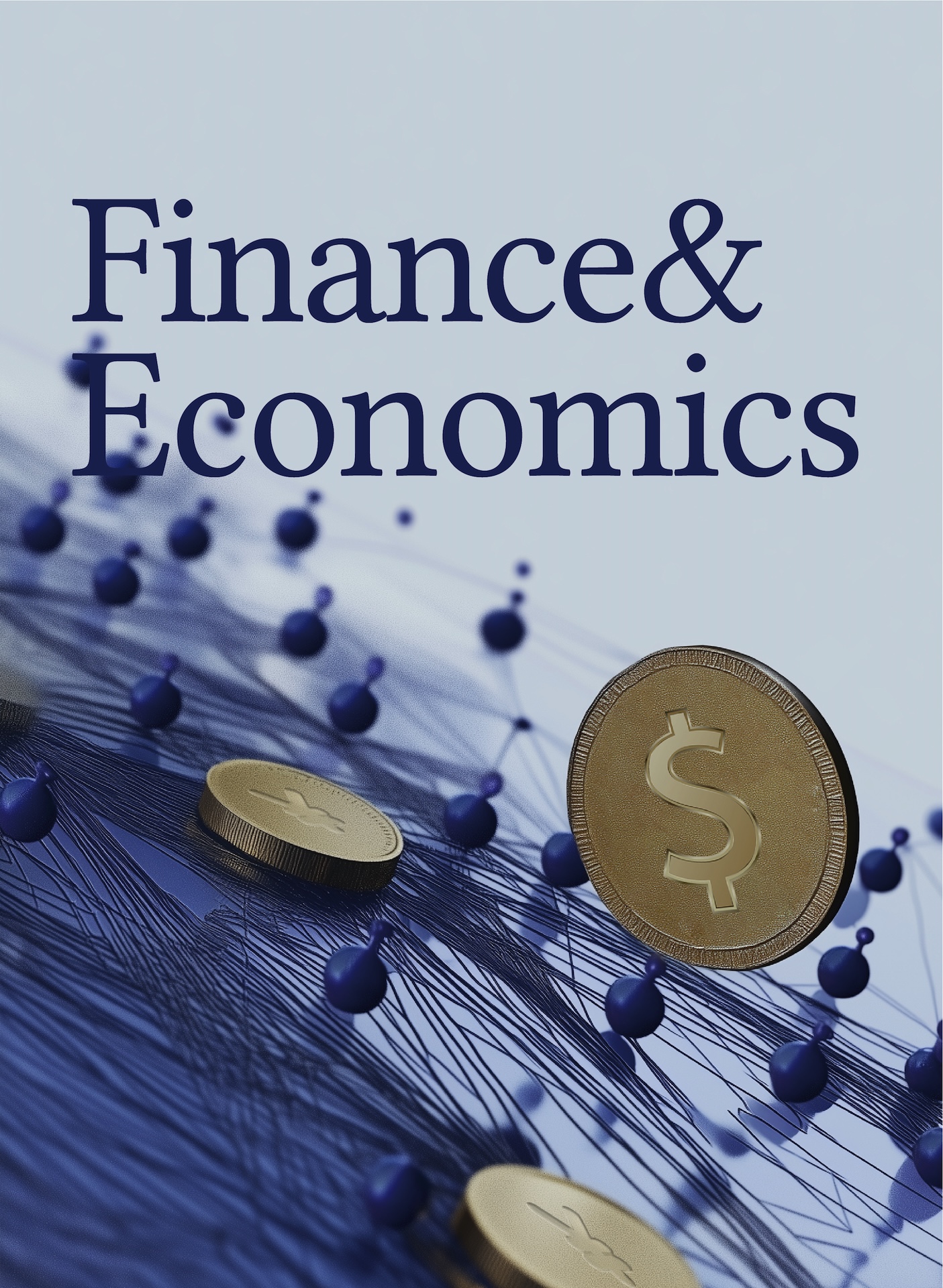
Journal of Finance & Economics
Journal Introduction
The Journal of Finance and Economics (JFE) is an accessible, peer-reviewed academic platform dedicated to the next generation of thinkers. Designed specifically for college students, young researchers and innovators, JFE serves as a bridge between foundational academic study and professional scholarly publishing.
Our journal provides a high-quality venue for emerging voices to share original research, case studies, and innovative theories in the fields of Finance, Economics, and Management. We are committed to fostering academic growth by providing a rigorous yet supportive peer-review process that helps early-career scholars refine their work and contribute to the global conversation.
Editor-in-chief:
Rana Muhammad Ammar ZAHID (The Business School, RMIT University)
Associate Editor:
Hadi Hussain (Xi'an Jiaotong University)
Editorial Board Member:
Muhammad Waleed Youn as (Xi'an Jiaotong University)
Zi Mu (The University of Manchester)
ISSN Information:
ISSN 2959-6130 (Print)
ISSN 2960-1312 (Online)
Journal Website
https://www.deanfrancis.press/ojs/index.php/fe/Publication Notes
All articles will be submitted to Google Scholar, Crossref, ResearchGate, UCSB Library, Ulrich's Periodicals Directory (part of ProQuest), SEMANTIC SCHOLAR, OpenAlex.
About ALSA
The American Life and Science Association (ALSA) is a U.S.-based organization designed as a launchpad for students, early-career researchers, and innovators working at the convergence of life sciences, engineering, and the humanities. ALSA serves as an open collaborative hub where biological curiosity and technical precision meet cultural insight and artistic expression.
The goal of ALSA is to empower the next generation of polymaths to move beyond traditional academic silos. We believe that the most significant breakthroughs happen not just when we apply the "design-build-test" mindset of engineering to living systems, but when we contextualize those systems within society, culture, and ethics.
Whether you are a student developing a new medical device, a researcher coding a genomic algorithm, or a sociologist analyzing the impact of biotechnology, ALSA provides a platform to validate your ideas. We foster a community where:
-
Engineering meets Ethics: Ensuring technological advancement respects cultural and social frameworks.
-
Data meets Design: Using the arts to visualize complex biological data and humanize user interfaces.
-
Science meets Narrative: Leveraging literature and language to communicate complex discoveries to a global audience.
The future belongs to those who can speak the language of the cell, the machine, and the society they serve. By integrating the arts, social sciences, and literature into the scientific process, ALSA ensures that tomorrow's innovations are not only functional but also accessible, ethical, and culturally resonant.